Basic Rights Every Citizen Should Know
Category: Select Category
Author: Adv. Rishabh Dixit
Date: 03 Apr 2026
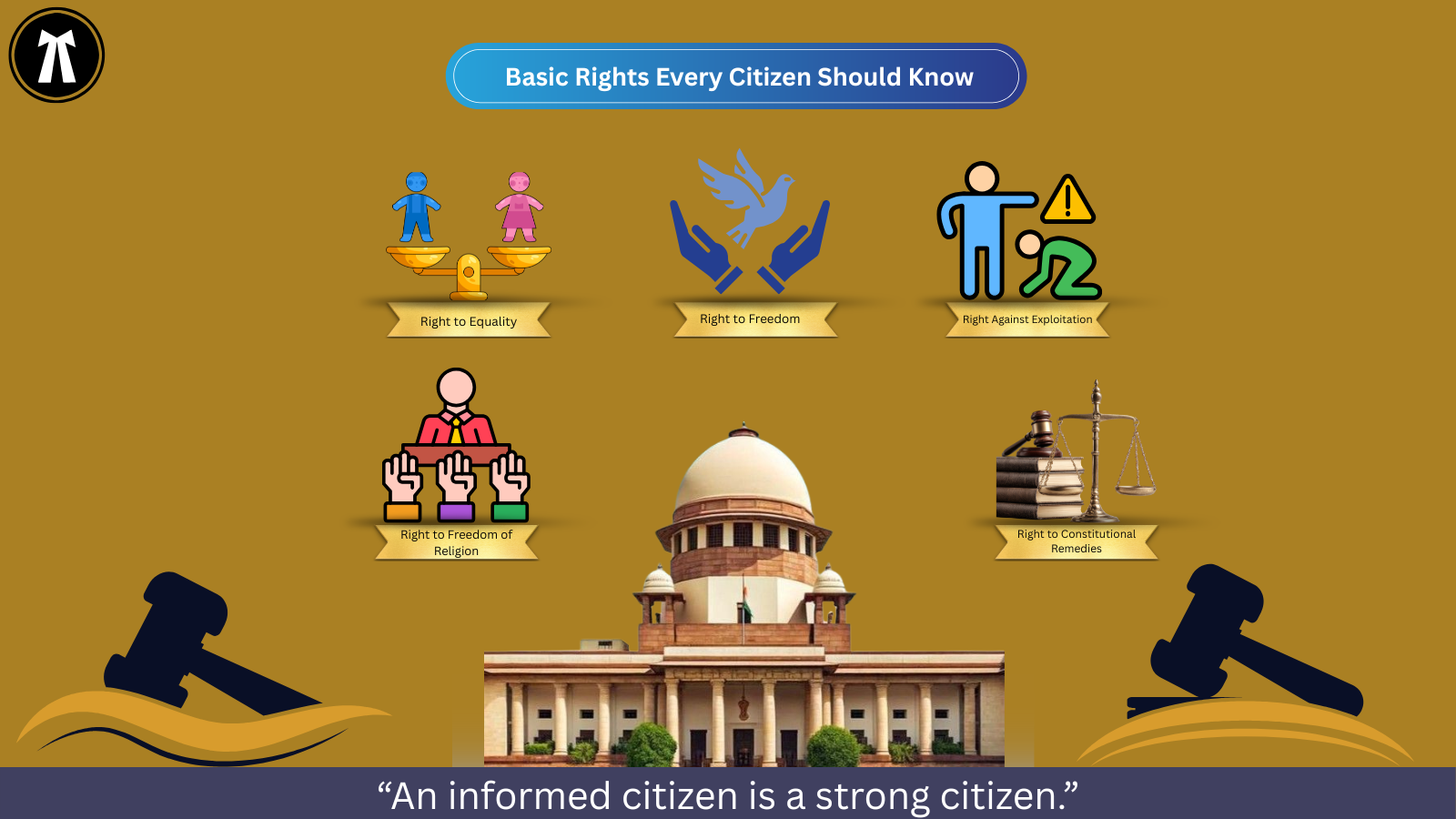
Basic Rights Every Citizen Should Know in India
Most people look for their rights only after a problem arises. An official notice from the police arrives. A family member is arrested for questioning. A school dispute turns into a serious matter. A property dispute quickly becomes legal. When that happens, anxiety is usually the first thing to come before clarity. This is why everyone needs to know some basic legal rights before trouble begins. It is not necessary to become a law expert. It is enough to have a basic knowledge of the rights that the Constitution guarantees, as well as what the law demands to be done, and when it is appropriate to seek out an attorney.
If you're looking for a Criminal and Civil Advocate at the Lucknow High Court or a reliable advocate in Lucknow, this guide provides a straightforward starting point. The guide is written in simple language, with no legal jargon, so even the most basic users can use it. These rights aren't abstract concepts from a textbook. They are part of everyday life: how authorities are treated, how police must behave, how children receive education, and how the courts safeguard people from unjust actions. Understanding the basics will help you remain calm, ask the right questions, and avoid mistakes.
Why knowing your basic rights matters
A right is only meaningful when the public is aware of its existence. Many people quietly accept unfair treatment because they believe they are in no position to change it. Sometimes they sign forms they don't comprehend. Sometimes they go to the police station on their own, without legal advice. Sometimes they remain silent because they believe "this is just how the system works." However, the law gives safeguards. If someone knows just a handful, it changes the whole situation.
Legal knowledge is essential in civil and criminal instances. In a criminal case, rights are crucial when police question you, arrest you, or set bail or conditions for your detention. In civil matters, individuals require guidance on property, family, document, tenancy, and contract disputes. This is why people searching for a Criminal & Civil Advocate in the Lucknow High Court are usually not looking just for an official title. They're seeking clarity, support, and someone who can present the law clearly and practically.
Right to equality
One of the most important concepts embodied in the Indian Constitution is that the State cannot deny equality before the law or provide equal protection of the law; in simplest terms, this means that the law cannot discriminate against one individual as less worthy than another. Also, the State can't use discrimination to circumvent the Constitution. For everyday citizens, this is a matter of public transactions and government processes, service accessibility, and other instances where one believes they are unfairly marginalized.
Equality does not mean that every situation is the same. Lawmakers can create reasonable classifications; however, the classifications must be based on a legal basis. If someone feels that they're being subjected to an unfair government decision or treatment, it shouldn't be dismissed without a second thought. An experienced advocate will help determine if the problem is simply an inconvenience or creates a legal issue.
Right to freedom
A different set of protections is provided by the rights granted to citizens. This includes freedom of expression and speech, peaceful assembly, the right to form associations, the freedom to move freely around India, the right to live anywhere in the nation, and the right to pursue a profession, trade, or business. These freedoms affect everyday lives more than most people realize. They impact how you talk, how you conduct your business, where you reside, and how you engage in the public realm.
However, freedom doesn't mean that there aren't any limits. The law permits reasonable restrictions in certain circumstances, including public order, morality, decency, security, defamation, and the violation of court orders. This is where the confusion starts. The majority of people believe that they are in control, or they think they are not. Truth is somewhere in between. Citizens do enjoy legal protection under the Constitution, but they must be aware that their rights are protected within the legal context.
Right to life and personal liberty
Article 21 is frequently referred to as one of the greatest safeguards provided by Indian law. In simple terms, it says that no person is deprived of life or liberty unless they follow the legal procedure. Although the language is brief, the actual significance is enormous. It represents respect, fairness, lawful procedures, and security against unjustified actions.
This is important when the state takes action against an individual. It is important in detention, custody, and other decisions that affect personal safety and dignity. It is also a reminder to citizens that procedure is not merely a formality. The procedure is a legal protection. Authorities aren't able to do what they like because of suspicion that something is wrong. They must follow the laws. Families facing an unexpected police intervention or other serious liberty-related issues seeking legal counsel early can find a consultation with a Criminal & Civil Advocate at the Lucknow High Court crucial.
Right to education for children
Education isn't just an essential social requirement; it also has a constitutional significance. The state is obliged to provide free and compulsory education to children aged 6 to 14. This is a very practical right since it directly affects families. It helps ensure dignity, access, and future opportunities.
Many parents think that issues related to education are merely administrative issues. But when access, admission, or other related disputes become grave, legal advice is important. A rights-based agreement helps families ask better questions and avoid being confused or pushed around by misinformation.
Rights at the time of arrest
This is among the most crucial sections of any public-awareness website, since it's where misinformation and fear spread the fastest. Anyone who is detained should be informed of the reasons for arrest, and the Constitution gives the right to seek advice and to defend themselves with a lawyer of the person's choice. In lawful procedure under the present criminal system, an individual arrested without a warrant must be informed of the specifics of the crime or the reasons for the arrest. If the case is bailable, then the arrested person should be informed of the bail rights. Law also requires details regarding the arrest, as well as the location where custody is to be made available to a friend, relative, or a nominated person.
These are not minor technical issues. In reality, they could make the difference between confused and informed actions. Families frequently waste time because they don't know what to ask. They don't ask about the reasons for being arrested. They do not inquire if they can get bail. They don't immediately call an attorney. This delay could make an already difficult situation even more stressful.
There are additional procedural safeguards that are important. The law states that no unneeded restraints should be used. It also states that, except in extraordinary circumstances, no woman is to be detained after sunset or before sunrise without prior approval. Additionally, anyone detained is not allowed to be held for longer than the legally allowed time without being brought before the authority in charge in accordance with the law. The reason for these rules is that arrests are a serious intrusion on liberty, and the process is designed to stop the misuse of liberty.
If a person close to you is detained or taken frequently to police stations, now is the right time to put aside the rumors. Contact an attorney who frequently handles criminal cases. A large number of people look for a criminal and Civil Advocate in the Lucknow High Court in such circumstances because they require immediate advice on procedure, not general guidance.
Right to constitutional remedies
A right is more effective when it has legal remedies to enforce it. The Constitution provides that the right to appeal to the Supreme Court for enforcement of Fundamental Rights, and that courts may issue writs in specific circumstances. For readers who are not lawyers, the main message is that Rights aren't just symbols of promise. There are legal avenues to contest violations.
It doesn't mean that every dispute is referred before the Supreme Court. However, it means the legal system recognizes that rights must be enforced. Since remedies exist and rights are legally binding, they have legal force.
Right to free legal aid
The biggest obstacle to justice is the fear that legal aid isn't worth the cost. This is why awareness of free legal aid is crucially important. The legal-aid framework reinforces the constitutional guarantee of equal justice, and NALSA states that women can receive free legal aid regardless of their income. NALSA further states that children are entitled to legal aid until they attain the age of majority (18), and that individuals in custody may also be eligible for legal aid.
This is vital to raise awareness among the public. Many people believe that legal services are only available to those who pay private legal fees up front. This isn't always the case. Based on the class a person is in, Legal aid could be offered. It is important to mention this since many vulnerable individuals suffer because they believe that help isn't available.
When should you contact a lawyer?
The ideal time to reach out to lawyers is earlier than the majority of people think. Don't just wait for the situation to turn irreparable. Lawyers should be contacted in the event of an arrest, police notification, or serious questioning regarding property disputes, family law issues, document disputes, or any other circumstance where the legal rights and procedures are unclear. A timely legal consultation can help avoid errors.
Local SEO is a great option, and this is where your message can be helpful without coming across as forced. If someone is seeking an advocate for civil or criminal cases before the Lucknow High Court, or an advocate in Lucknow, they are usually looking for clear communication as well as legal representation. They are looking for information on what they should do next in the case, which documents are essential, the risks, and the actions that are urgently required.
Conclusion
Knowing a citizen's rights does not guarantee that you must defend yourself in every legal case. It's about knowing how to protect your family members and yourself at any time during a significant incident. Freedom of expression and equality before the law respect dignity and education, and security measures to prevent the detention of a person, legal aid, and constitutional rights are elements of a system created to safeguard people from injustice and confusion.
The most effective approach is to be informed, keep records, don't panic, and seek legal assistance earlier. If your readers reside in Uttar Pradesh and are searching for a Civil and Criminal Advocate in the Lucknow High Court or a reliable advocate in Lucknow, the topic naturally connects to the type of legal assistance people need most urgently: practical, sensible, and focused on rights.
Frequently Asked Questions
What are the basic rights every citizen should know in India?
In a practical sense the public should be aware of equality before the law and freedom-related protections. They should also know about living rights, and personal liberty, the right to education to children and legal rights for the time of arrest, right to pursue constitutional remedies as well as the possibility of legal aid that is free in the right circumstances.
What should I do if police arrest a family member?
Be calm, learn the reason for the arrest, find out where the suspect is held, ensure that the person who is responsible for the arrest is aware and you can get in touch with a lawyer right away. Don't rely solely on unofficial or verbal information.
Can I talk to a lawyer after arrest?
Yes. The Constitution guarantees the right of the person being detained to seek advice and defend by a legal professional of their choice. The prompt assistance of a lawyer is vital in bail or legal matters.
Who can get free legal aid?
NALSA states that women can be eligible regardless of their income, children can be eligible until the age of 18 and those in other qualified categories are also able to seek legal assistance under the framework of legal services. This is the reason why one should not assume that legal assistance is not available.